
Fifteen people from five countries completed a training program led by the Amazon Waters Alliance to integrate ethics, rights, and data governance into participatory science initiatives.
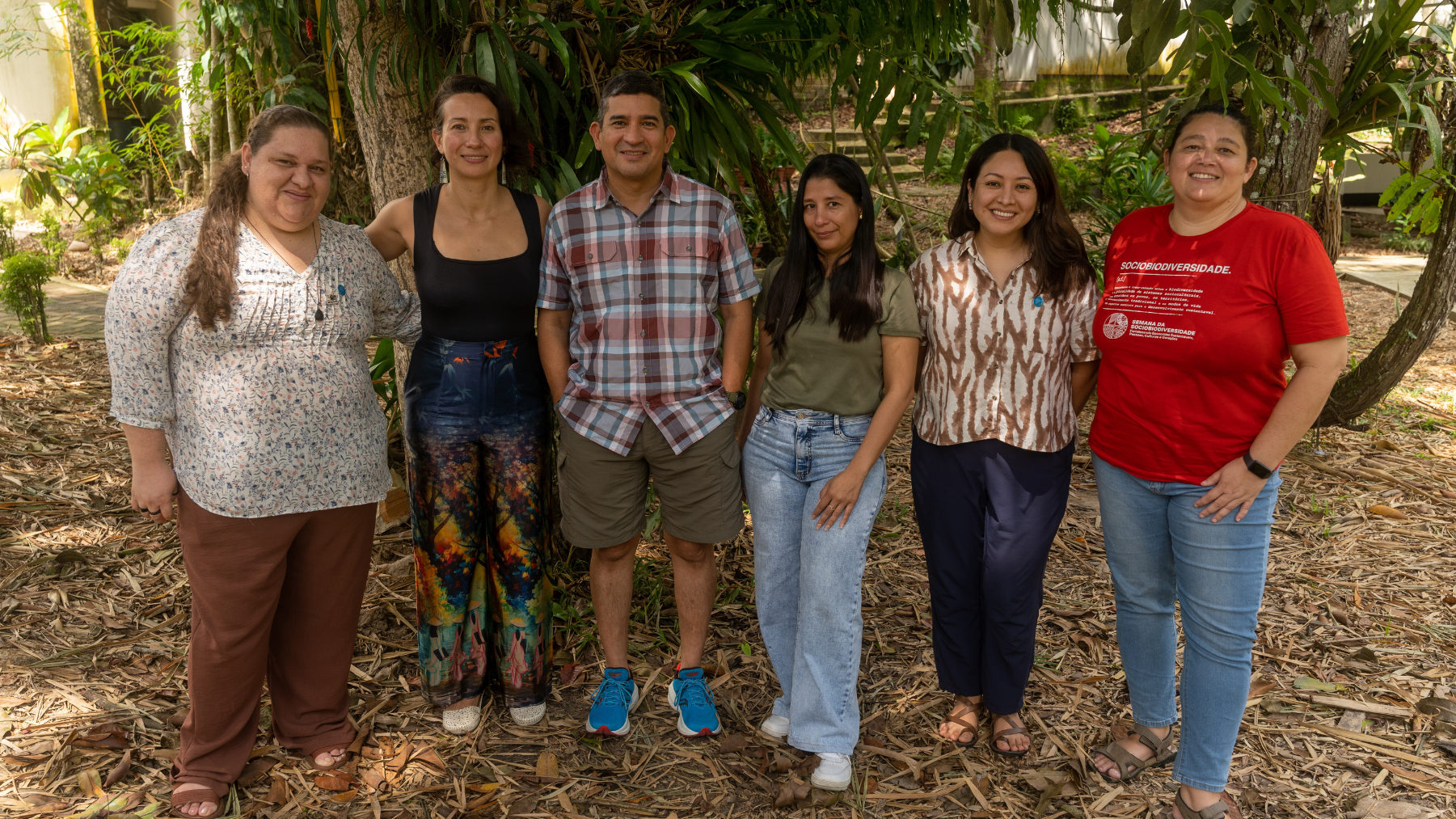
Participants in the Amazon Waters Alliance’s data ethics training sessions. © Kevin Hemer / WCS
How can data be managed responsibly when communities, local organizations, researchers, and institutions are involved in generating it? This question guided the training process on ethics and data governance in participatory science, which concluded in September 2026 with 15 certified participants from Argentina, Brazil, Colombia, Ecuador, and Peru.
The initiative included six virtual workshops, an initiative clinic, and five community of practice meetings. Participants who received certification completed 27 hours of training, combining synchronous sessions and independent work. Thirteen are affiliated with the Amazon Waters Alliance, while two participate through partner networks: the Citizen Science Network for the Amazon (RICAP) and the Brazilian Citizen Science Network (RBCC).
From Principles to Practice
The training combined conceptual learning with practical exercises based on real participatory science initiatives. Four initiatives were involved throughout the course: TIKA-Yahuarcaca, GEF Páramos para la Vida, SMART-Ictio in collaboration with the Napo River fishers’ association, and participatory monitoring of Amazonian aquatic ecosystems. In addition, the Borboletas Capixabas initiative received targeted support on consent, participation terms, and privacy.
Using these cases, participants tested a toolkit and four instruments to guide data management: a data management plan, informed consent, a project information sheet, and a data-sharing agreement.
The work addressed decisions that go beyond technical considerations, including how to inform participants, establish agreements on the use and sharing of data, recognize their contributions, and take into account the rights, knowledge, and needs of those who generate it.
According to Karen Soacha, the process facilitator, data governance involves considering not only technical aspects but also the relationships and responsibilities associated with generating information.
“Data governance in participatory science is one of the pillars for building transparent, reliable, and traceable knowledge. Agreeing with communities, volunteers, research teams, and institutions on who uses the data, how and where they are used, and what controls are in place makes responsible research possible and builds trust among everyone involved,” says Karen Soacha, a researcher with the EMBIMOS group and co-chair of the Ibero-American Network for Participatory Science, who led this process.
A Community for Sharing Experiences and Continuing to Learn
The community of practice broadened the exchange through five open meetings on the FAIR principles, the CARE and CREA principles, citation and recognition of contributions, platforms, data sovereignty, and privacy.
These spaces connected the course’s lessons with the questions and challenges faced by different initiatives. They also created opportunities to share experiences, compare approaches, and continue working on the application of the tools.
Plans for sustaining the community include regular meetings, short clinics to examine specific cases, and the collaborative improvement of the tools. Other priorities include strengthening shared leadership and facilitating the circulation of resources in Spanish and Portuguese.
A Commitment to Collaborative Science in the Amazon
The training is part of the Amazon Waters Alliance’s work to strengthen the capacities of its member organizations and promote collaboration in generating and using information about the Amazon Basin.
“At the Amazon Waters Alliance, we recognize that participatory science requires not only high-quality data but also clear agreements on how data are generated, managed, and shared. Strengthening our organizations’ capacities to address these issues is part of our commitment to collaborative and responsible science that respects the rights and knowledge of the people and communities who contribute to generating information about the Amazon Basin,” says Dino Delgado of the Alliance’s Technical Secretariat.
Integrating ethics and governance from the outset of a participatory science initiative makes it possible to consider not only data quality, organization, and availability, but also the people, rights, and relationships that make data generation and use possible. The process provides tools and spaces for exchange to help initiatives affiliated with the Alliance continue incorporating these considerations into their work.