

Categoría de longitud: Small (<40 cm)
Nivel trópico: Detritivores
Patrón Migratorio: Local (<100 km)
Período de desove: Low + Rising
Mercado de exportación: Regional (in Amazon)
Estado del mercado: Third class
Distribución de capturas:
Acari potential yield was estimated to be approximately 1,400 tons. The main fishery regions are the Lower Amazon (40%), Peruvian Amazon (30%) and Central Amazon (23%), which together represent 93% of the total catch. The Tocantins region has a moderate acari potential yield of 5%.
Notas de historia natural:
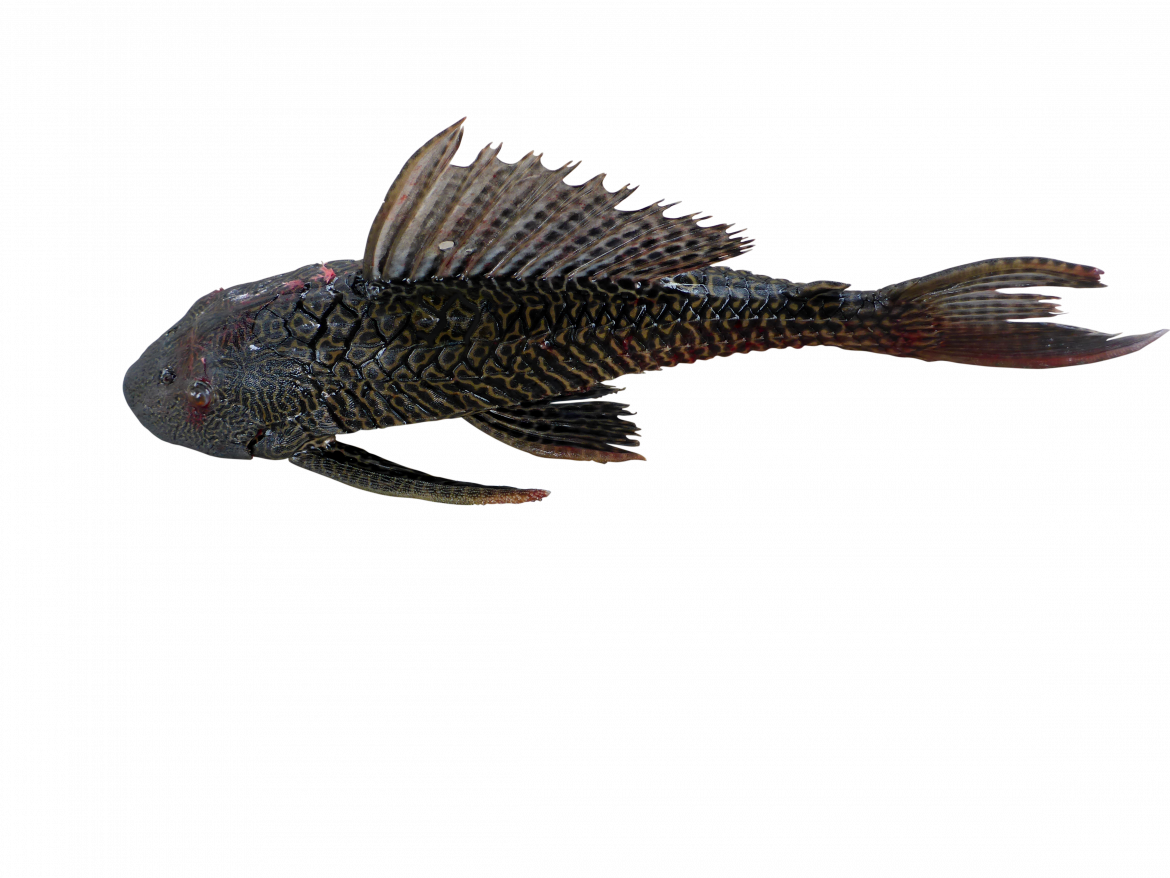
The acari fish group of food fishes includes various genera and species of the armored catfish family 𝐿𝑜𝑟𝑖𝑐𝑎𝑟𝑖𝑖𝑑𝑎𝑒. Commercial fisheries exploit mainly Pterygoplichthys pardalis and secondarily Hypostomus emarginatus. Acari species of the commercial fisheries are sedentary fishes and are abundant in várzea lakes of whitewater rivers. They feed mostly on detritus and algae that is scraped or rasped from the bottom substrate. Pterygoplichthys pardalis spawns once annually in holes made in lake banks. Male parental care is also practiced.

Distribution of acarí catch. Source: Barthem, R., Goulding, M. 2007. An unexpected ecosystem: the Amazon as revealed by fisheries. Missouri Botanical Garden Press.
| Brazil | |
| Acari-bodó | Pterygoplichthys pardalis |
| Bodó | Pterygoplichthys pardalis |
| Acari-pedra | Hypostomus emarginatus |
| Colombia | |
| Cucha | Pterygoplichthys pardalis |
| Peru | |
| Carachama | Hypostomus emarginatus |
| Carachama | Pterygoplichthys pardalis |