

The waters of Amazonian rivers are classified, both locally and in academic literature, by their color. Different processes determine a river’s color, the most important being the amount of sediment it carries. Although transition zones exist where colors may combine, three water types are broadly recognized: whitewater, clearwater, and blackwater rivers.

In the Amazon Basin there are several water types, ranging from alkaline to highly acidic, and which can be classified into whitewater, blackwater, and clearwater rivers. The different types of water have a great influence on aquatic productivity and biodiversity. The thickness of the river lines does not represent the flow of the river.
Clearwater rivers
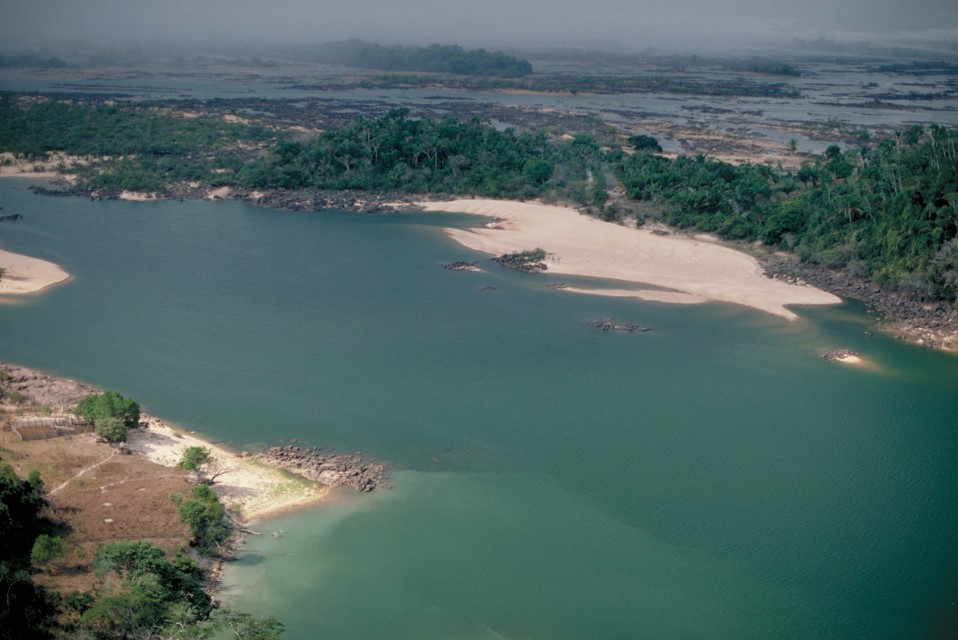
Clear waters of the Xingu River near the site where the Belo Monte Dam is being constructed. Department – Country: Pará – Brazil Main Basin – Sub Basin: Xingu – Xingu Main Stem Photographer: Michael Goulding
Blackwater rivers
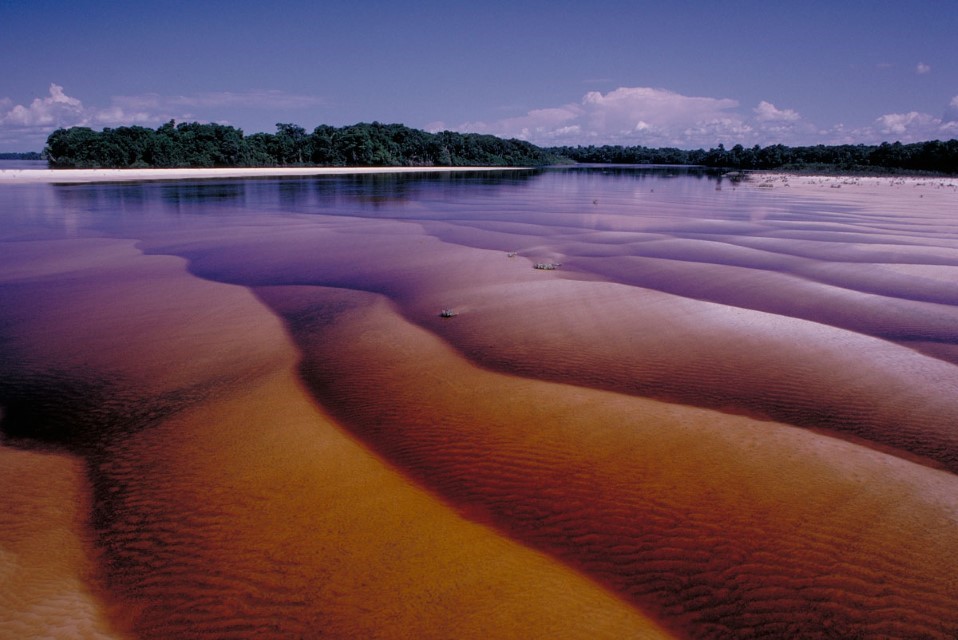
Blackwater is mostly produced in basins with sandy soils. The Negro is characterized by its large sandy beaches. This image shows the appearance of shallow waters on a sandy beach of the middle Negro River. Department – Country: Amazonas – Brazil Main Basin – Sub Basin: Negro – Negro Main Stem Elevation: 34 Photographer: Michael Goulding
Whitewater rivers
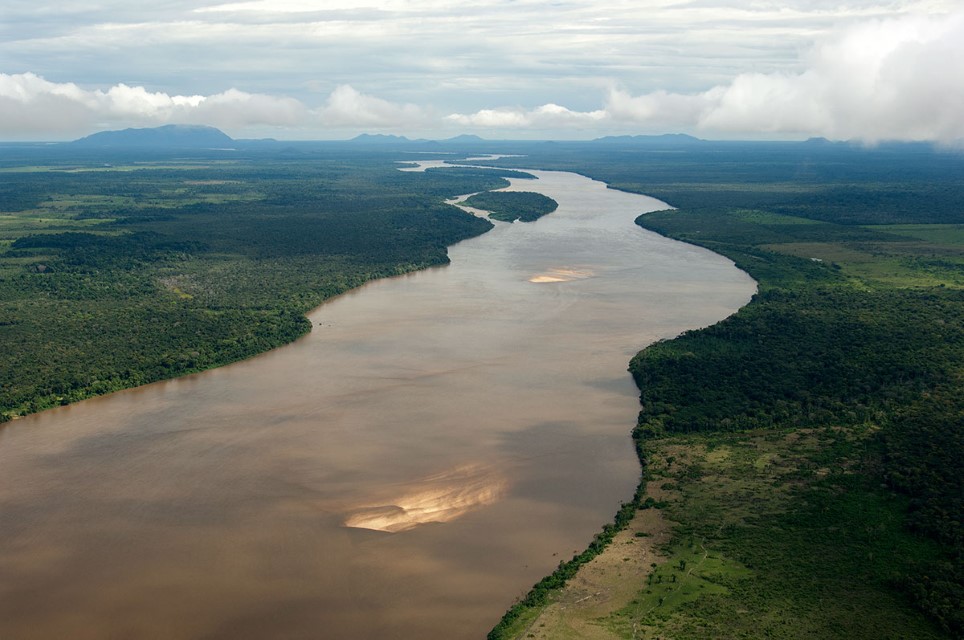
Department – Country: Amazonas – Brazil Main Basin – Sub Basin: Negro – Lower Negro Main Stem Photographer: Luiz Claudio Marigo