

Blackwater rivers are characterized by tea-colored waters, crystalline and low in sediment, but stained dark by organic compounds leached from the forests they flow through.
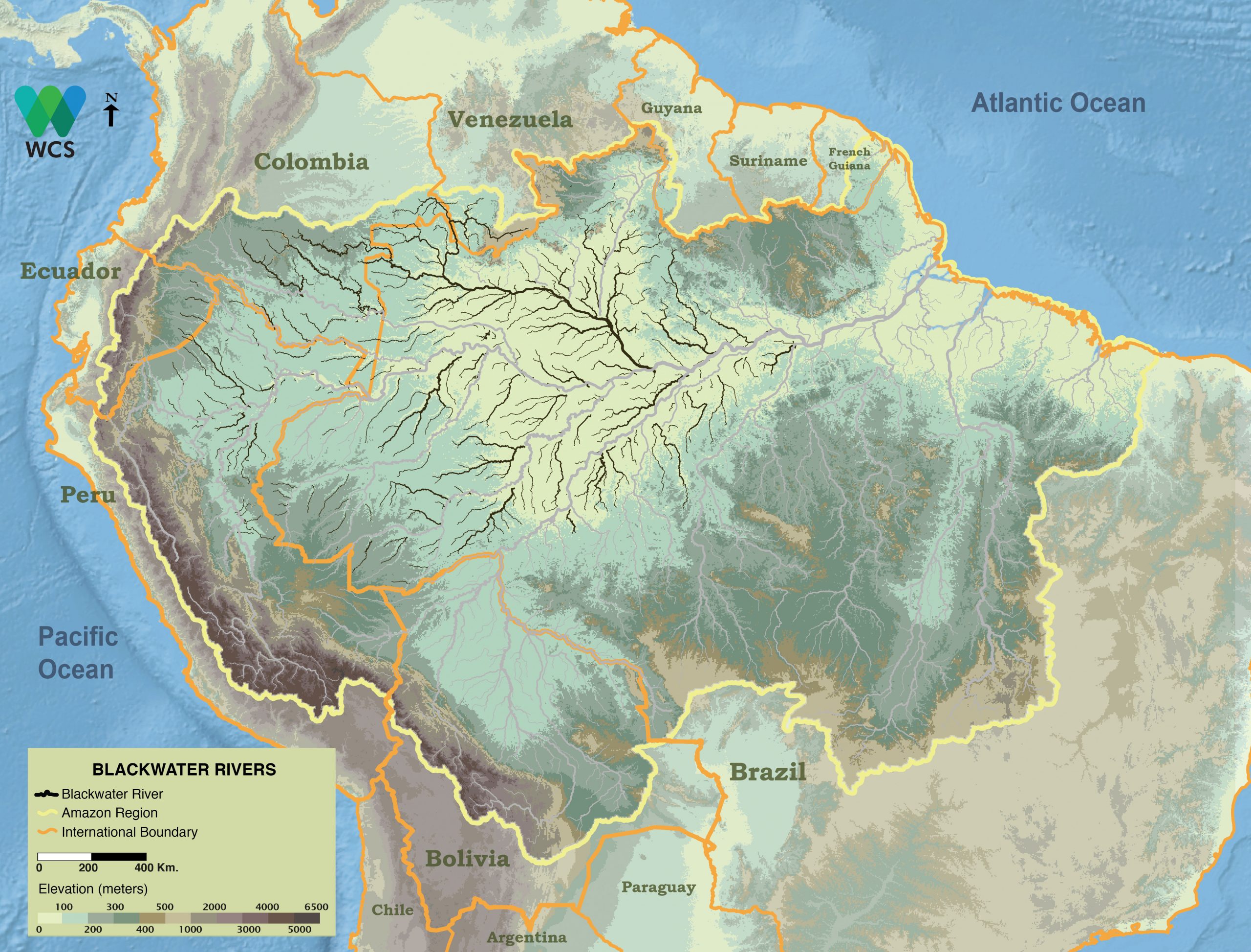
Map: Wildlife Conservation Society, 2016.
Blackwater rivers are characterized by high acidity due to organic compounds that also stain them dark in color. The Negro River is by far the largest.
Some blackwater tributaries in the Amazon Basin originate in the lowlands, approximately below 300 m elevation in the middle and lower basin and associated with basins with extremely sandy soils. The blackwater river region of the Amazon extends east and west of the Rio Negro, covering the lowlands dominated by sandy soils. The aptly named Negro ranks sixth globally by annual discharge, second among the world’s river tributaries, and is the largest blackwater river on Earth.
Small blackwater rivers and rainforest streams are found in all Amazonian countries, but Brazil has the largest number of Amazonian blackwater rivers.
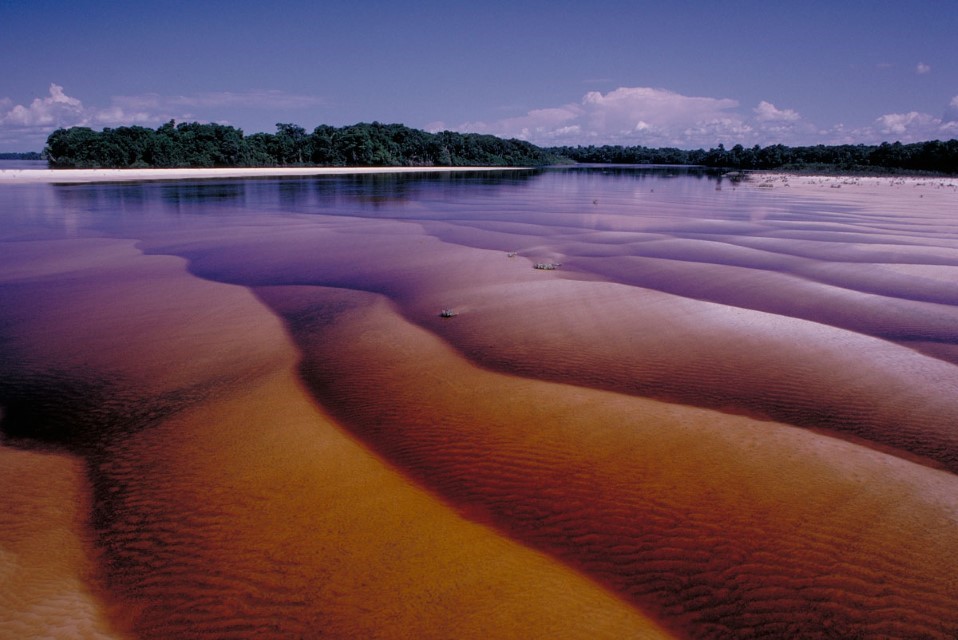
Blackwater is mostly produced in basins with sandy soils. The Negro is characterized by its large sandy beaches. This image shows the appearance of shallow waters on a sandy beach of the middle Negro River. Department – Country: Amazonas – Brazil Main Basin – Sub Basin: Negro – Negro Main Stem Elevation: 34 Photographer: Michael Goulding
The color of blackwater rivers
The dark color of the water originates from the presence of organic matter that is not completely decomposed. Blackwater can be formed wherever the rate of carbon fixation (photosynthesis) and its partial decay to soluble organic acids exceeds its rate of complete decay to carbon dioxide (oxidation). This phenomenon can take place on land, in groundwater, or in streams, rivers and lakes. The exact physical and biological processes leading to blackwater formation are complex and varied. However, due to the poor soil in which they originate, blackwater rivers are, like clearwater rivers, very poor in nutrients. The high concentrations of organic compounds in blackwater rivers render them highly acidic, usually within the range of 3.8 to 5.4.