

At COP15 of the Convention on Migratory Species (CMS), Parties unanimously adopted the Regional Action Plan for Amazonian Migratory Catfish, marking a new milestone for the conservation of these species.
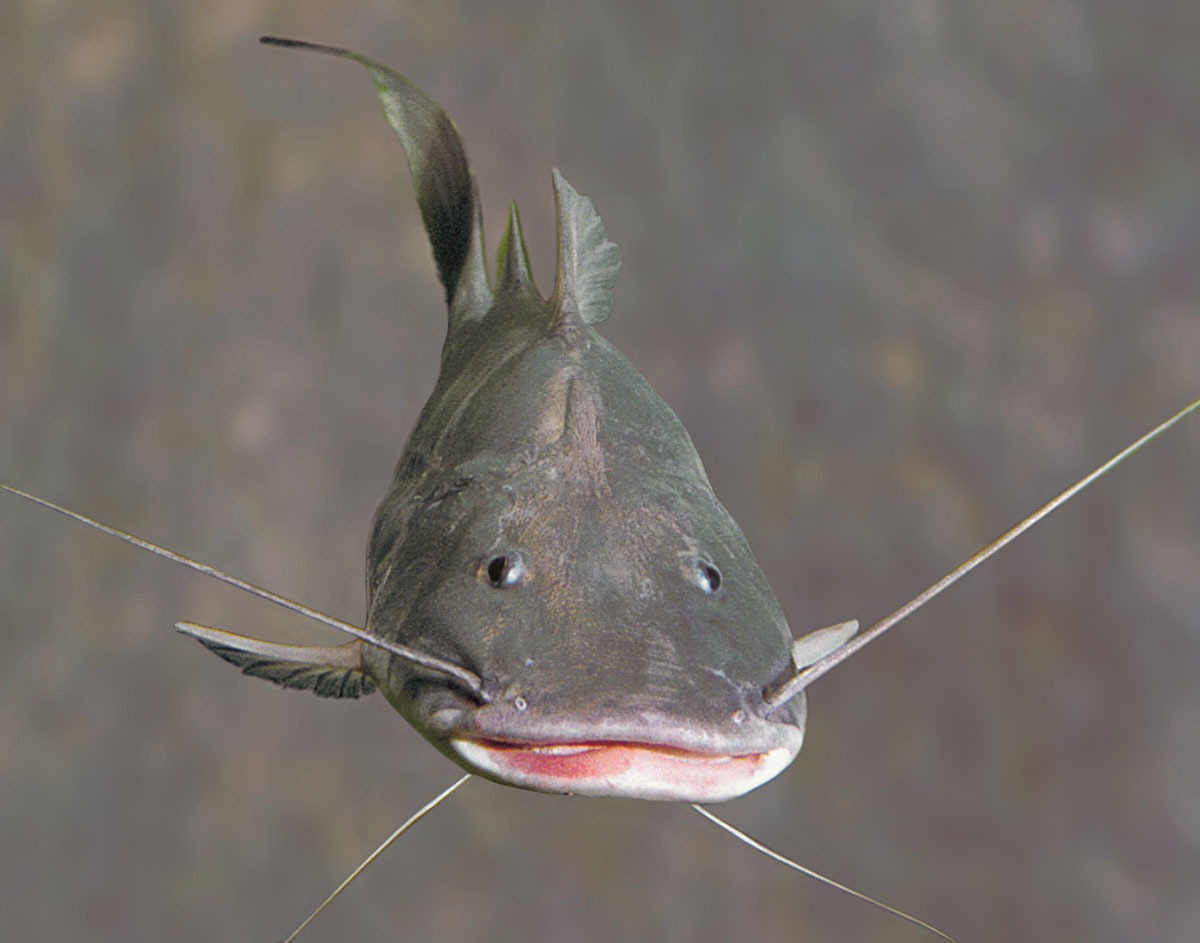
Manitoa or piramutaba (Brachyplatystoma vaillantii), an Amazonian catfish that migrates over 6,000 km. Photograph: © Michael Goulding / WCS
This resolution was proposed by the Government of Brazil to CMS and received strong support from the delegations of Amazonian countries that are Parties—Bolivia, Ecuador, and Peru—as well as from the European Union. It was also supported by Venezuela, a non-Party country within the species’ range.
This approval builds on the process initiated at COP14, where dorado (Brachyplatystoma rousseauxii) and piramutaba (Brachyplatystoma vaillantii) were included in Appendix II of CMS, and enables the definition of concrete, coordinated actions at the scale of the Amazon Basin.
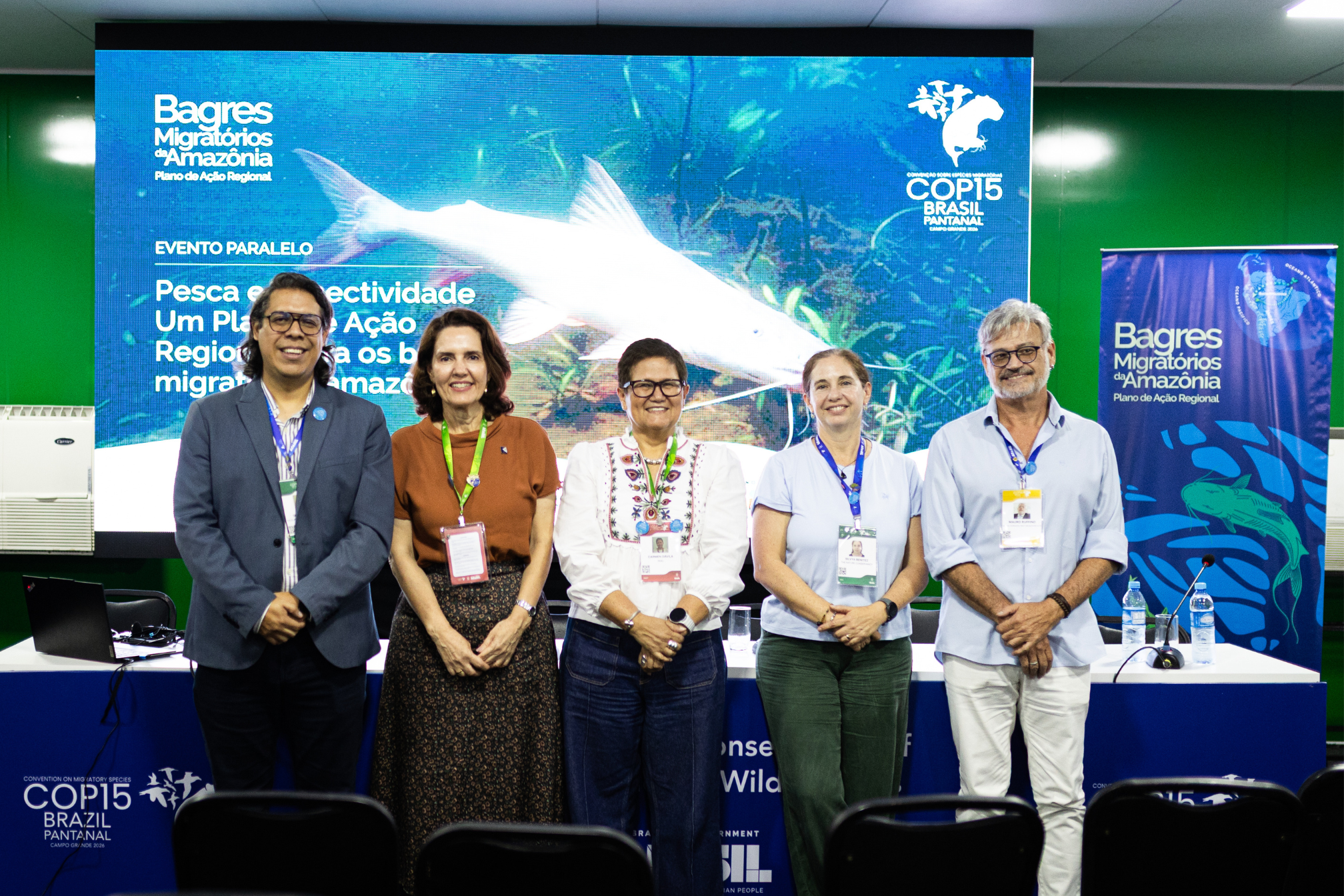
Event «Fishing and Connectivity: A Regional Action Plan for Amazonian Migratory Catfish» with representatives from Amazon Waters, the Ministry of Aquaculture and Fisheries of Brazil, and the OTCA.
This Plan reflects a shared vision among Amazonian countries. Incorporating river connectivity into planning strengthens biodiversity conservation and contributes to the well-being of the populations that depend on these rivers,” said Rita Mesquita, Secretary of Biodiversity at Brazil’s Ministry of the Environment and Climate Change.
During the plenary, Bolivia expressed its support for the approval of the Regional Action Plan for Amazonian Migratory Catfish. “This instrument strengthens cooperation among Amazonian countries for the conservation of migratory species that are key to basin connectivity and food security,” emphasized Alejandro Araujo-Murakami, Director General of Biodiversity at the Ministry of Environment.
Similarly, Darwin Córdova, Wildlife Specialist at Ecuador’s Ministry of Environment and Energy, noted that “The Andean Amazon plays a key role in the reproduction of migratory catfish, and the Regional Action Plan strengthens river connectivity and coordination among countries.”
Large migratory catfish travel up to 11,000 km round trip between the Andes and the Atlantic. These species connect ecosystems and countries and act as sentinels of the health of Amazonian rivers. Their conservation depends on maintaining connected corridors across Brazil, Bolivia, Colombia, Ecuador, and Peru and is key to sustaining the livelihoods of millions of people who depend on fisheries in the Amazon.
“This resolution reaffirms that Amazon connectivity is a shared challenge. No country can address it in isolation,” said Dr. Sue Lieberman is the Wildlife conservation Society’s vice. President for International policy
The Plan establishes a common roadmap to conserve habitats and migratory corridors, strengthen scientific, Indigenous, and local knowledge, and promote sustainable fisheries practices, in a context of increasing pressures on river connectivity. Within this framework, it identifies three priority actions for the next 12 months: 1) conserve habitats and connectivity of Amazonian rivers; 2) strengthen scientific, Indigenous, and local knowledge; and 3) promote sustainable value chains linked to fisheries management.
This Plan moves us from commitments to action.
“This is an opportunity for strengthened collaboration among governments, academia, civil society, Indigenous Peoples, local communities, and fishers’ associations to advance concrete actions,” said Dr. Zeb Hogan, CMS Scientific Councillor for Freshwater Fish
The President of COP15 and Executive Secretary of the Ministry of Environment and Climate Change, João Paulo Ribeiro Capobianco, highlighted the central role of integrating different forms of knowledge in the development of conservation policies.
“This process underscores the importance of integrating scientific and traditional knowledge from the beginning of discussions. What we are seeing is growing recognition that traditional knowledge is highly specialized and provides very precise insights into species’ life cycles, their migratory routes, key passage points, and the factors affecting their populations,” he added. “This integration of science and traditional knowledge has produced highly relevant results and is fully aligned with the objectives of the Convention, by expanding the evidence base available to inform more effective conservation policies,” Capobianco concluded.
“From the Amazon Waters Alliance, we will support this process through concrete actions, promoting joint work among governments, science, civil society, and local communities,” said Vanessa Rodríguez, Chair of the Board of the Amazon Waters Alliance.
Read the Executive Summary of the Plan